
 15 Dec 2025
A Luxor & Valley of the Kings day tour is the closest thing Egypt has to stepping into a history book and finding the pages still warm. Luxor is not a “nice stop” on an itinerary—it’s the former heart of Ancient Thebes, a place where temples were built to speak to gods, and tombs were carved to protect eternity. In one day, you can move from towering columns and sacred lakes to desert cliffs hiding royal burial chambers that changed how the world understands Ancient Egypt.
Remal Sinai created this Luxor day tour for travelers who want the experience to feel smooth, clear, and genuinely meaningful—especially Russian-speaking guests who value explanations that are easy to follow, not a blur of names and dates. The purpose of the day is simple: see the essential sites, understand what you’re seeing, and return with memories that feel real, not rushed.
Luxor concentrates Egypt’s greatest ancient architecture into a compact area on both banks of the Nile. That means your day is rich without being chaotic—if it’s planned properly. A well-designed Luxor excursion gives you three things at once:
Monumental scale (temples that redefine “big”)
Human stories (kings, queens, priests, artisans, and workers)
A complete narrative (life, power, death, and afterlife beliefs)
It’s also one of the best destinations for anyone who wants “the real Egypt” beyond beaches—without losing comfort, safety, or organization.
The difference between a great Luxor trip and an exhausting one is not the heat or the distance. It’s logistics. The route, the timing, the transitions between stops, and the pace of the guiding all determine how you feel at the end of the day.
This is why many travelers prefer pre-arranged transfers and reliable pick-up coordination. Remal Sinai can support your day from the first minute through our dedicated Transportation service, so you arrive calm, on time, and ready to enjoy Luxor rather than negotiate your way into it.
If you want an even more elevated experience—privacy, smoother handling, and a premium rhythm—our VIP Services are designed for travelers who prefer their day trip to feel effortless.
Every group’s priorities differ. Some travelers want maximum temples. Others want maximum tombs. The best Valley of the Kings tour balances both sides of Thebes so the story makes sense.
Karnak is not a single temple—it’s a vast sacred complex expanded by generations of pharaohs. Walking through the Hypostyle Hall, you don’t just see columns; you feel the ancient desire to build “forever.” The scale is purposeful. Temples were not only places of worship—they were institutions, economic centers, and political statements carved into stone.
A strong guide will help you notice the “language” of Karnak: the aligned axes, the symbolic gateways, the relief scenes, and how each ruler tried to leave a larger signature than the one before.
Luxor Temple complements Karnak. Historically, these spaces were connected by sacred processional routes, turning the city itself into part of religious life. Luxor Temple feels different—more intimate, more urban, more ceremonial. It’s a reminder that ancient religion wasn’t abstract; it was performed in public rhythms and seasonal festivals.
In ancient belief, the west—where the sun “died” each evening—became the symbolic realm of the afterlife. That’s why the West Bank holds the greatest concentration of tombs and funerary temples. This shift in scenery is part of the experience: green Nile fields fade behind you, and the desert cliffs take over, quiet and imposing.
The Valley of the Kings is one of the most emotionally powerful sites in Egypt. It’s not the outside that shocks you—it’s the inside. You step into chambers covered in carefully planned art and texts meant to guide a king through the afterlife. The colors can feel surprisingly vivid, and the atmosphere—cooler, quieter—creates a sense of entering a protected world.
A guided Valley of the Kings day tour becomes dramatically better when the meanings are explained in a simple storyline:
Why the tombs moved from pyramids to hidden valleys
How burial architecture protected the king’s journey
How art, language, and symbolism worked like a spiritual map
This is the difference between “I saw a tomb” and “I understood a civilization.”
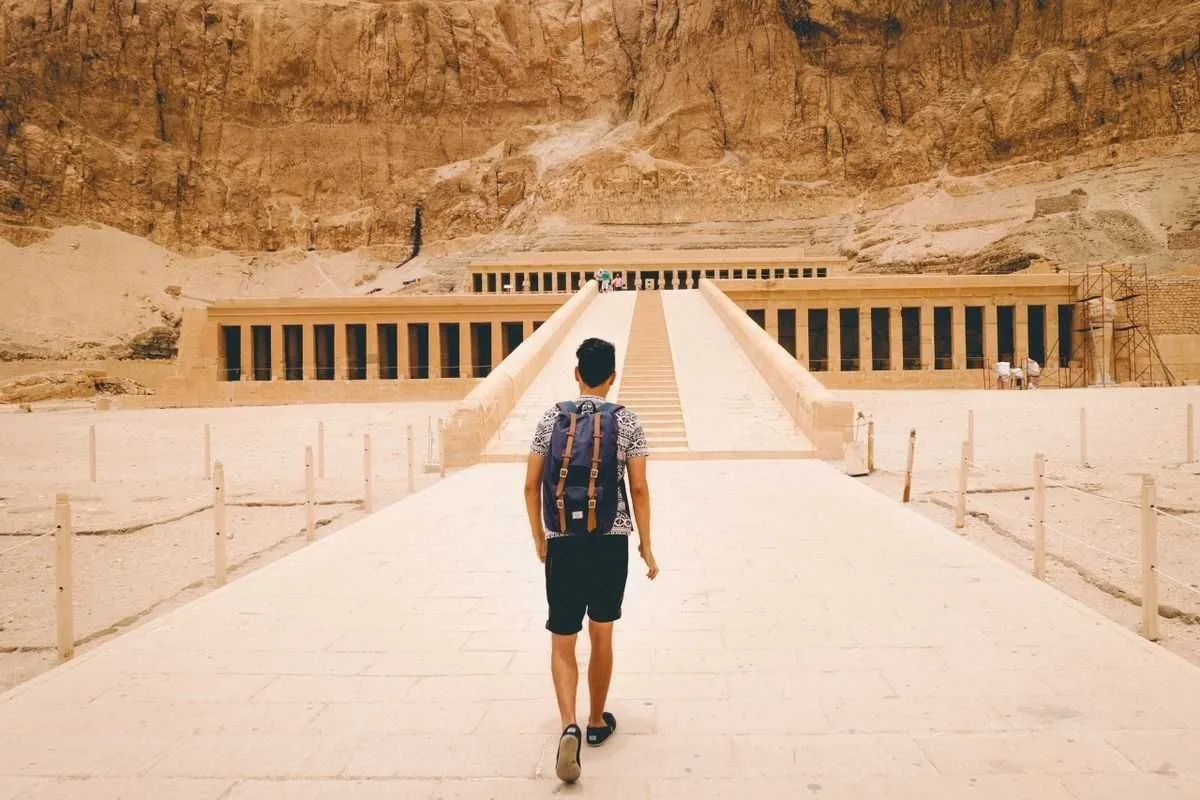
The mortuary temple of Queen Hatshepsut at Deir el-Bahari is one of Egypt’s most striking architectural compositions. Built against the cliffs, it feels balanced, deliberate, and bold—like Hatshepsut herself. The story here is not only about a monument; it’s about legitimacy, power, and how rulers crafted identity through architecture and relief scenes.
The Colossi of Memnon are a signature stop for most Luxor day tours. They stand as reminders of a much larger complex and give you a “pause moment”—a chance to step back, take photos, and absorb the scale of what once surrounded them.
Luxor rewards guidance. Without it, you can still be impressed—but you may leave with scattered facts and missed meaning. With the right guide, the sites connect into one narrative:
How kingship worked as theology and politics
Why temples were built where they were
How funerary texts became visual “instructions” for the afterlife
What daily life might have looked like for workers, artisans, and priests
Remal Sinai focuses on tours that are understandable and comfortable for Russian-speaking travelers: clear communication, patient explanation, and a rhythm that fits families and mixed-age groups.
A private Luxor day tour is ideal if you want flexibility: slower walking pace, extra photo time, breaks when needed, and a more personal Q&A experience. Small groups can be perfect if you like a social atmosphere without the “crowd effect.” Either way, the goal is the same: make the day feel calm and organized, not like a race against the clock.
If you already know your dates and want the day tailored to your hotel schedule, you can reach the team through Contact Us and describe the style you prefer—temple-focused, tomb-focused, family pacing, or VIP rhythm.
Luxor is comfortable when you plan like a professional traveler, not like someone who hopes the sun will “be nice today.” Bring:
Sun protection (hat, sunglasses, sunscreen)
Comfortable shoes (stone and sand are unforgiving)
Water and light snacks
A light layer (air-conditioned breaks can feel cool)
A phone power bank (you will take more photos than expected)
The best day is not the one where you “endure” Luxor. It’s the one where you enjoy it.
Luxor is memorable because it gives you scale and intimacy at the same time. In the morning you’re dwarfed by columns built to impress gods. Later you’re inside tombs that feel personal, precise, and quietly human—designed for a single individual’s journey into eternity. Few places in the world offer that contrast in one day.
By the time the day ends, you don’t just remember sites. You remember emotions: the shadow of a temple wall, the sudden quiet of a tomb corridor, the desert cliffs glowing in late light, and the sense that you have finally seen why Egypt is not a destination—it’s a civilization.


