



Ancient Egyptian Jewelry: Symbols, Materials & Meanings
Discover the Stories Behind Ancient Egyptian Jewelry
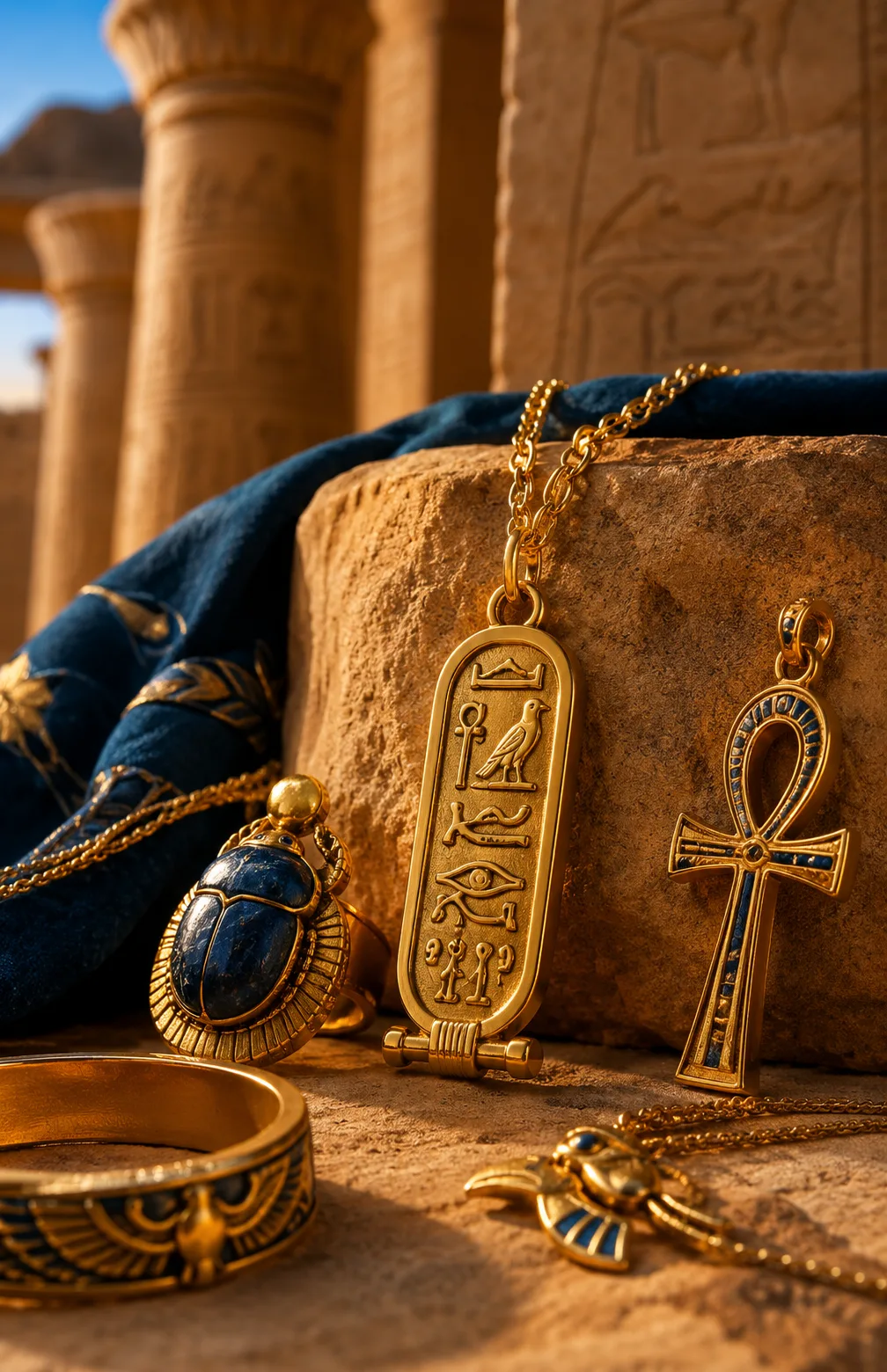
From the ankh and scarab to the Eye of Horus, lotus and royal cartouche, Egyptian jewelry combines remarkable craftsmanship with symbols that have remained recognizable for thousands of years.
Ancient Egyptian jewelry was much more than decoration. Necklaces, broad collars, rings, bracelets, beads and amulets could communicate social status, craftsmanship, religious ideas and personal identity.
Many of the symbols used by ancient Egyptian artisans remain familiar today. The ankh, scarab, Eye of Horus, lotus and cartouche continue to appear in jewelry inspired by Egypt.
This guide focuses on the broader history and symbolism of Ancient Egyptian jewelry. If you specifically want to learn about personalized cartouches, see Remal Sinai's Egyptian Cartouche Guide.
Quick Guide: Egyptian Jewelry Symbols
| Symbol | Traditional Association | Common Modern Form |
|---|---|---|
| Ankh | Life | Pendant or necklace |
| Scarab | Regeneration and renewal | Amulet, ring or pendant |
| Eye of Horus | Protection and restoration | Protective motif |
| Cartouche | Royal name and identity | Personalized name pendant |
| Lotus | Renewal and rebirth | Decorative motif |
Why Was Jewelry Important in Ancient Egypt?
Ancient Egyptian jewelry was produced in many forms and from many materials. Surviving archaeological examples include elaborate collars, bracelets, rings, earrings, beads and amulets.
The Metropolitan Museum of Art documents jewelry ranging from early shell necklaces to complex gold works and explains that Egyptian amulets frequently took symbolic forms, including scarabs.
1. The Ankh — Life
The ankh is one of the most immediately recognizable hieroglyphic symbols associated with Ancient Egypt and is traditionally connected with the idea of life.
Its distinctive shape also makes it particularly suitable for modern pendants and necklaces.
2. The Scarab — Renewal and Regeneration
Scarab-shaped amulets became extremely widespread in Ancient Egypt. The beetle's behavior became associated with the movement of the sun, helping connect the scarab with life and regeneration.
Want to Explore the History Further?
The Met's Egyptian amulet collection provides examples of scarabs and other protective forms used throughout Egyptian history.
3. The Eye of Horus — Protection
The Eye of Horus, or wedjat eye, became one of Ancient Egypt's most familiar protective motifs and remains widely recognized in Egyptian-inspired jewelry.
4. The Lotus — Renewal
Lotus imagery appears frequently in Egyptian art. Its relationship with the natural cycle of opening and closing helped associate the flower with regeneration and renewal.
5. The Egyptian Cartouche — Name and Identity
The cartouche is especially interesting because it connects the visual tradition of Ancient Egypt with a person's name.
Modern personalized jewelry adapts the cartouche form by placing a modern name inside a cartouche-style pendant using hieroglyphic signs.
Looking Specifically for an Egyptian Cartouche?
Read the dedicated guide about cartouche meaning, personalized names and arranging an order in Sharm El Sheikh.
Gold in Ancient Egyptian Jewelry
Gold played an important role in Egyptian jewelry and surviving collections demonstrate sophisticated techniques used to create bracelets, pendants, necklaces and other objects.
The Met notes that gold jewelry was not limited exclusively to royalty and documents numerous surviving examples from Ancient Egypt.
Learn more: Gold in Ancient Egypt — The Met
What About Silver?
Silver was also used for beads, ornaments and religious objects in ancient Egypt. Today, sterling silver provides a popular material for Egyptian-inspired personalized jewelry.
Learn more: Silver in Ancient Egypt — The Met
Gold vs Silver Egyptian Jewelry
| Feature | Gold | Sterling Silver |
|---|---|---|
| Appearance | Warm and luxurious | Bright and versatile |
| Modern use | Luxury jewelry and keepsakes | Everyday and personalized jewelry |
| Gift style | Premium occasions | Accessible personalized gifts |
Turn Your Name into an Egyptian-Inspired Keepsake
Remal Sinai currently offers personalized cartouche options, including an 18K gold pendant and sterling silver designs.
How to Choose Egyptian-Inspired Jewelry
| Check | Why It Matters |
|---|---|
| Material | Confirm exactly what the jewelry is made from. |
| Purity | Check the stated gold karat or silver specification. |
| Personalization | Confirm the spelling before production. |
| Production time | Personalized pieces may require preparation. |
| Delivery | Confirm hotel or international delivery availability. |
| Returns | Custom-made products may have different conditions. |
Frequently Asked Questions
What jewelry did Ancient Egyptians wear?
Surviving examples include necklaces, broad collars, bracelets, rings, earrings, beads and many types of amulets.
What does the ankh symbolize?
The ankh is traditionally associated with life.
What did scarab jewelry symbolize?
Scarabs became closely associated with regeneration and renewal.
What is an Egyptian cartouche?
A cartouche is the modern name for the elongated enclosure used around certain royal names. Modern jewelry adapts the form for personalized name pendants.
Where can I learn more about personalized cartouches?
Read the Remal Sinai Egyptian Cartouche Guide.
Need Help Choosing or Ordering?
Contact Remal Sinai directly to ask about current cartouche options, personalization and delivery.
WhatsApp / Call: +20 114 048 1414
Email: info@remalsinai.com


